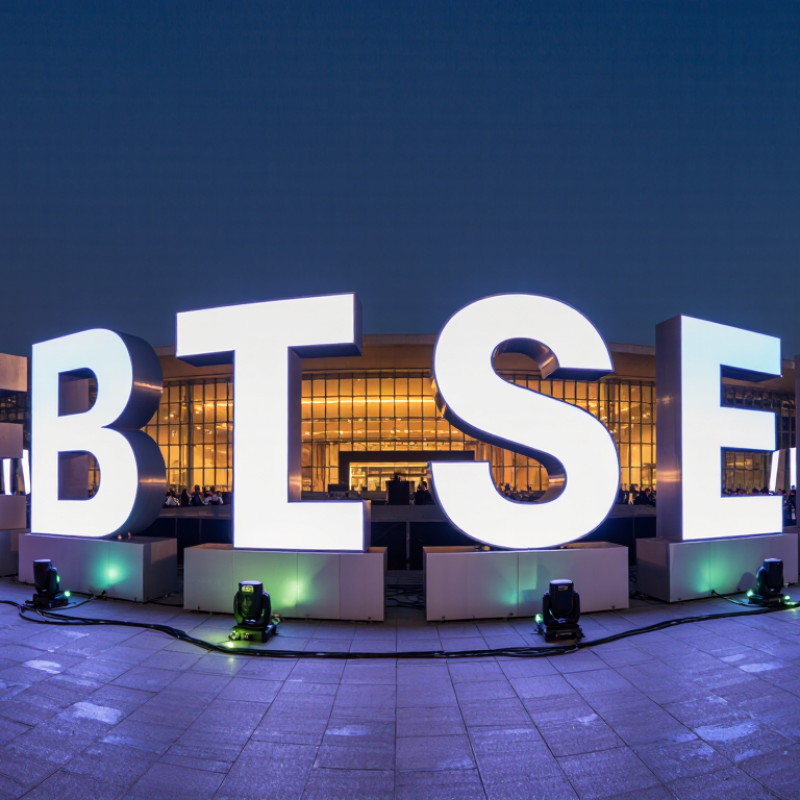
| Core Definition | Free-standing giant LED letters are individually supported, illuminated letter-shaped structures that can stand without being fixed to a building façade or suspended from a rig. | Usually built as modular letter units with a structural frame, LED display surface, rear access, base, and ballast or anchoring system. | Suitable for entrances, stages, fan zones, exhibitions, public squares, product launches, and ceremonial photo areas. | Confirm whether the project requires display-capable letters, decorative illuminated letters, or a hybrid design before requesting quotations. |
| Display Technology | The LED module or pixel system used to create animated text, graphics, video, color effects, or static illumination. | Common configurations include surface-mounted LED modules, flexible LED strips, or rigid LED panels integrated behind a translucent face. | Determines image quality, brightness, service access, power demand, and content capability. | Use a video-capable LED system when content changes are required; use static illumination when only color and visibility are needed. |
| Letter Height | The overall vertical measurement from the bottom of the base or frame to the highest point of the letter. | Common event formats range from approximately 1.2 m to 3.0 m; larger structures require project-specific engineering. | Controls visibility, shipping volume, viewing distance, crowd interaction, and wind exposure. | For normal walk-up photographs, 1.2–1.8 m often provides a practical human-scale format; use taller units for distant audience viewing. |
| Letter Depth | The front-to-back thickness of the letter enclosure, including the frame, LED components, ventilation space, and service clearance. | Often approximately 0.25–0.60 m for modular event letters, depending on height, display construction, and structural requirements. | Affects stability, truck space, storage footprint, and the distance required between the unit and public circulation routes. | Keep service doors and ventilation openings away from public contact areas whenever possible. |
| Pixel Pitch | The center-to-center distance between adjacent LED pixels, measured in millimetres. A smaller pitch generally supports closer viewing. | Typical close-viewing event displays may use approximately 1.5–4.8 mm pixel pitch; the correct value depends on viewing distance and content. | Influences legibility, image detail, module cost, and the visibility of individual pixels in photographs. | Select pixel pitch using the closest expected viewing distance rather than the maximum audience distance alone. |
| Viewing Distance | The distance between the audience or camera and the illuminated LED face. | Close photo zones may begin below 3 m; stage and public-area installations can require 5 m, 10 m, or more. | Determines required pixel pitch, letter proportions, brightness, camera performance, and content scale. | Create separate viewing zones for walk-up photography, general spectators, and long-distance audience viewing. |
| Luminance | The apparent brightness of the LED surface, commonly expressed in candelas per square metre (cd/m²). | Indoor systems are commonly specified at lower brightness levels than outdoor systems; outdoor requirements vary with sunlight, shade, and local regulations. | Insufficient brightness reduces daylight visibility, while excessive brightness can cause glare and complaints. | Use automatic brightness control or scheduled dimming, and verify settings during both daytime and nighttime operation. |
| Refresh Rate | The number of times per second the display updates its image, expressed in hertz (Hz). | High-refresh configurations are preferred for camera-facing events; the required value depends on the camera system and control hardware. | Reduces visible flicker, scan lines, or banding in photography and video production. | Request a camera test with the actual broadcast or photography equipment before final approval. |
| Ingress Protection | An enclosure rating that indicates resistance to dust and water under defined test conditions, commonly written as IP followed by two digits. | Outdoor suitability requires a rating appropriate to the exposed face, rear enclosure, connectors, and cable entry points; IP ratings are not a substitute for weather engineering. | Rain, dust, humidity, condensation, and cleaning procedures can affect reliability. | Specify the required environmental rating for every exposed component and include rain covers or drainage where needed. |
| Structural Support | The base, internal frame, ballast, anchoring, or stabilizing method that allows each letter to remain upright. | Methods include weighted bases, floor anchors, linked base frames, outriggers, and engineered temporary structures. | Large letters act as sails in wind and may create public-safety risks if not stabilized. | Require a site-specific stability assessment that considers wind speed, surface type, letter geometry, ballast, and crowd access. |
| Wind Management | The design and operating procedure used to control wind loads on temporary LED letter structures. | Allowable operating conditions must be set by the responsible structural engineer or competent temporary-works professional. | Weather changes can require dimming, shutdown, evacuation, additional ballast, or removal. | Include a written wind-monitoring and shutdown plan, especially for open-air festivals and waterfront venues. |
| Electrical Input | The mains supply and distribution arrangement required to operate LED modules, receiving cards, processors, fans, and control equipment. | Event systems commonly use local single-phase power, but voltage, current, connectors, and circuit loading vary by country and equipment design. | Insufficient capacity can cause nuisance trips, uneven brightness, overheating, or unplanned downtime. | Obtain a load schedule in watts and amperes, separate display circuits from auxiliary equipment where practical, and use qualified electrical personnel. |
| Power Consumption | The electrical energy drawn by the complete letter system during operation. | Actual consumption depends on letter area, pixel pitch, brightness, color content, refresh settings, ventilation, and control hardware. | Impacts venue power allocation, generator sizing, operating cost, cable routing, and thermal management. | Request both maximum and typical power figures; plan distribution using the maximum design load, not the average content load. |
| Control System | The hardware and software used to send images, video, color effects, schedules, and brightness commands to the LED letters. | May include a media player, sending controller, receiving cards, network cabling, wireless links, and backup control equipment. | Determines content flexibility, synchronization, remote monitoring, and fault recovery. | Use a documented signal diagram, locked content settings, spare control hardware, and a tested backup playback method. |
| Content Resolution | The number of addressable pixels available across the letter surface or across a group of synchronized letters. | Resolution is determined by the active display area and pixel pitch; irregular letter shapes may produce non-rectangular content maps. | Controls the level of detail possible in logos, animation, text, gradients, and video. | Prepare content templates using the actual pixel map and test small text at the intended audience distance. |
| Color Performance | The ability of the LED system to reproduce colors consistently across letters and viewing conditions. | Performance depends on LED binning, calibration, control settings, diffuser material, camera exposure, and ambient light. | Color mismatch is highly visible when multiple letters form one word or event message. | Calibrate all letters as one display group and approve colors under the venue’s actual lighting conditions. |
| Thermal Management | The methods used to remove heat from LED modules, power supplies, processors, and enclosed electronics. | May include passive ventilation, filtered vents, fans, heat sinks, temperature sensors, and automatic protection. | High ambient temperature and blocked ventilation can shorten component life or trigger shutdowns. | Maintain clear ventilation paths, keep filters clean, and monitor temperature during long-duration operation. |
| Public Interaction | The level of physical contact, proximity, climbing risk, and crowd movement expected around the letters. | Installations may be decorative, walk-up, touch-accessible, or separated by barriers. | Public access affects enclosure strength, cable protection, sharp-edge control, heat exposure, and supervision. | Use barriers or a managed queue where necessary and protect connectors, power cables, and service panels from public access. |
| Transport and Modularity | The method used to divide, pack, move, and reassemble the letters for international or multi-venue events. | Modular frames, removable bases, flight cases, stackable components, and labelled cable sets are common solutions. | Influences freight volume, customs documentation, handling equipment, installation time, and storage requirements. | Prepare a packing list with dimensions, gross weights, case numbers, lifting points, spare parts, and reassembly drawings. |
| Installation Time | The time required to unload, position, assemble, connect, test, calibrate, and sign off the installation. | A small modular set may be installed within one working shift; larger or outdoor systems may require multiple shifts and technical inspections. | Impacts venue access windows, labour costs, rehearsal schedules, and contingency planning. | Allow time for a full content test, electrical inspection, structural check, and nighttime brightness review before opening. |
| Accessibility and Compliance | The design and placement measures used to maintain safe access, circulation, visibility, and emergency routes. | Requirements depend on the venue, country, fire authority, electrical rules, temporary-structure rules, and audience profile. | Oversized letters can obstruct exits, narrow walkways, create trip hazards, or affect accessible routes. | Obtain venue approval, preserve emergency egress, protect cable crossings, and complete a documented risk assessment. |
| Maintenance Access | The ability to reach LED modules, power supplies, control electronics, connectors, and ventilation components for service. | Common solutions include rear doors, removable panels, front-service modules, quick-release frames, and labelled spare modules. | Fast access reduces event downtime and avoids dismantling the complete letter structure. | Keep a repair kit with spare modules, power supplies, data cables, fuses, tools, and approved cleaning materials. |
| Best Use Case | The event environment in which free-standing giant LED letters provide the greatest operational and visual value. | High-impact uses include branded environments without naming specific brands, public celebrations, sports fan zones, exhibitions, media backdrops, and stage entrances. | They combine three-dimensional visibility with programmable light, making them useful for both audience engagement and photography. | Choose the format according to audience distance, weather exposure, content complexity, venue power, and available installation time. |