What Are Quick Turn PCB Boards and How Fast Are They?
When a prototype must move from CAD files to a tested circuit board within days, Quick Turn Pcb Boards become a practical manufacturing option. They support rapid validation, design changes, and early product testing without waiting for a conventional production schedule. Typical turnaround ranges from 24 hours to seven business days. The exact time depends on layer count, board material, surface finish, drilling requirements, and inspection needs.
Speed has limits. A simple two-layer FR-4 board may ship quickly, while a multilayer board with controlled impedance requires more engineering review. IPC standards, including IPC-2221 and IPC-6012, provide essential guidance for design, performance, and qualification. These standards do not guarantee delivery speed. They help manufacturers control risk when schedules become compressed.
Industry data also explains why this service matters. IPC’s 2024 electronics industry outlook highlights continuing supply-chain pressure, uneven demand, and the need for stronger production flexibility. The U.S. Department of Commerce’s electronics supply-chain assessments similarly emphasize domestic manufacturing resilience and shorter response cycles. These findings make rapid PCB fabrication more than a convenience.
It is a risk-management tool.
However, faster does not always mean better. A rushed design review can create solder-mask issues, drill defects, or assembly delays later. Experienced engineers usually confirm stack-up data, Gerber files, material availability, and electrical requirements before promising a deadline. Buyers should compare the quoted lead time with inspection scope, not the calendar alone. In practice, the fastest board is useful only when it arrives accurate, testable, and ready for the next engineering decision.
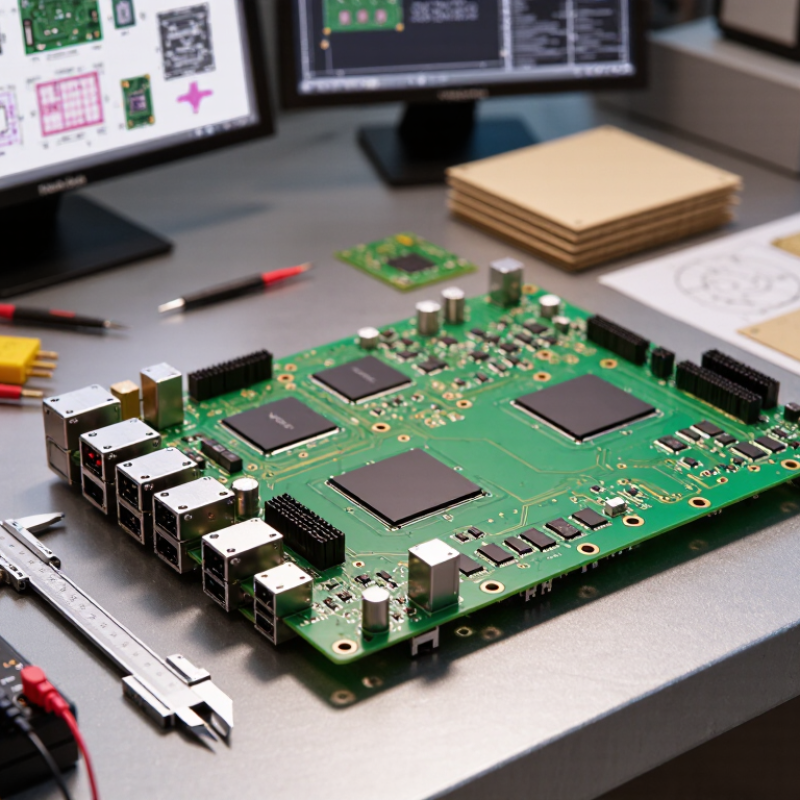
What Are Quick Turn PCB Boards?
Quick turn PCB boards are printed circuit boards produced on an accelerated schedule. They help engineers test designs, repair prototypes, and prepare small production runs without waiting several weeks. A typical order may take two to seven working days, depending on layer count, materials, board size, and inspection needs.
Speed does not mean unlimited flexibility. A simple two-layer board with standard laminate usually moves faster than a multilayer board with fine traces, blind vias, or controlled impedance. Manufacturing begins after design files are checked, including Gerber data, drill files, and the bill of materials. Experienced engineers also review clearances and hole sizes before production. This step can feel slow, but it prevents expensive rework. No PCB service is truly instant.
Tips:
Prepare complete, verified files before requesting a quote. Keep the first prototype simple when possible. Ask about testing, material availability, and shipping time separately. A fast factory schedule may still produce a late delivery if logistics are overlooked. Also, confirm whether urgent processing affects electrical testing or visual inspection. I have seen projects lose time because one missing drawing caused repeated questions. That mistake is easy to make, even for skilled teams. Quick turn boards are most useful when speed supports careful engineering, rather than replacing it.
Which Factors Determine PCB Turnaround Speed?
Quick-turn PCB boards
are prototype or low-volume circuit boards produced faster than standard orders. Their speed is not fixed. A simple two-layer board may be fabricated within 24 to 72 hours, while multilayer boards often require several business days. IPC’s 2023 North American PCB Statistical Program reported a 15.5% year-on-year decline in PCB sales. That pressure can increase scheduling competition when factory capacity is limited.
The biggest factor is design complexity. Layer count, fine traces, controlled impedance, microvias, and tight tolerances require extra processing and inspection. Material selection matters too. Common laminates are usually easier to source than high-frequency or high-temperature materials. Panel utilization also affects timing. A poorly arranged panel can create additional cutting, routing, and engineering work. Missing fabrication notes can delay a quotation before production even begins. Testing requirements add more time, especially for flying-probe or electrical testing. IPC’s 2024 Electronics Industry Sentiment Survey also identified material availability, labor, and production capacity as continuing industry constraints.
Tips: Send complete Gerber files, drill data, stack-up details, and inspection requirements together. Ask whether the quoted time includes engineering review, manufacturing, testing, and shipping. A “24-hour” claim may cover fabrication only. That distinction is easy to miss. Environmental controls, holidays, and rework can extend the schedule. Engineers should also question whether extreme speed is worth reduced review time; rushing a prototype can expose mistakes later.
How Fast Can Quick Turn PCB Boards Be Produced?
Quick-turn PCB boards are prototype circuit boards made under compressed production schedules. Their speed depends less on the word “quick” and more on design complexity. Industry benchmarks commonly place simple two-layer boards at 24 to 72 hours after file approval. Four-layer boards often require three to five working days. HDI, rigid-flex, controlled impedance, and unusual materials can extend production beyond seven days.
The clock starts after engineering review, not after upload. A clean Gerber package, confirmed stack-up, and available laminate can remove several delays. IPC-2221C and IPC-6012D emphasize clearance, dielectric control, and performance verification; these requirements still apply during accelerated builds. A 2024 IPC technology roadmap also identifies finer features, higher layer counts, and advanced materials as major manufacturing constraints. That matches practical experience. A missed drill note can erase a day.
Assembly adds another variable. A bare board may leave the factory in two days, while component sourcing and inspection can require five to ten more. Standard components move faster than obsolete or tightly controlled parts. Shipping is separate again. A 2023 electronics manufacturing lead-time survey reported that material availability remained a leading cause of schedule disruption, even when fabrication capacity existed. The estimate is useful, but not sacred. I would reserve one extra working day for first-article inspection, especially when impedance coupons or microsection testing are required. A fast board is only genuinely fast when it arrives electrically correct.
When Should You Choose Quick Turn PCB Manufacturing?
Quick-turn PCB boards are manufactured on an accelerated schedule for prototypes, repairs, and urgent design checks. Delivery may take 24 hours to several business days. Actual timing depends on layer count, board size, materials, surface finish, and testing requirements.
Speed has conditions.
When should you choose quick-turn PCB manufacturing? It fits projects where an early physical board can prevent expensive design mistakes. Engineers often use it after reviewing circuit simulations but before approving volume production. A small board with standard materials may move quickly through fabrication. A dense multilayer board with controlled impedance needs more preparation and inspection.
Before ordering, provide complete Gerber files, drill data, stackup details, and a clear bill of materials. Confirm copper thickness, solder mask color, and testing needs. A missing file can delay an otherwise simple build. I have seen teams blame fabrication delays when their documentation was incomplete.
Quick-turn production also helps repair teams replace a damaged control board without waiting weeks. It suits low-volume builds, especially when design changes remain likely. However, faster service can cost more and may limit material choices. I still leave a schedule buffer because my first estimate is not always right. For production quantities, standard manufacturing usually offers better unit pricing and process stability. Rushing a design that has not passed electrical and mechanical checks can create rework instead of progress.
What Are Quick Turn PCB Boards and How Fast Are They? - When Should You Choose Quick Turn PCB Manufacturing?
Typical PCB manufacturing timelines and selection guidelines
Lead times are typical working-day estimates for standard rigid PCBs after design files, payment, and engineering review are completed. Actual timing varies by board complexity, materials, quantity, and shipping.
| Manufacturing Option |
Typical Production Time |
Common Board Profile |
Typical Prototype Quantity |
Relative Cost |
Best Use Case |
Main Limitation |
| Quick Turn |
1–3 working days |
1–4 layers, standard FR-4, standard thickness and copper weight |
5–50 boards |
High |
Urgent prototypes, engineering validation, demonstrations, and design revisions |
Limited material and finish choices; rush capacity may be restricted |
| Standard Prototype |
5–10 working days |
2–8 layers, standard or moderately customized specifications |
10–200 boards |
Medium |
General product development and electrical or mechanical testing |
Longer development cycles than an urgent quick-turn order |
| Production Batch |
10–20 working days |
2–12 layers, controlled materials, finishes, and process specifications |
100–10,000+ boards |
Low to medium per board |
Planned production, inventory replenishment, and cost-sensitive orders |
Not suitable when boards are needed immediately |
| Complex or Specialized PCB |
15–30+ working days |
High layer count, rigid-flex, metal-core, HDI, impedance control, or unusual materials |
5–500 boards |
High to very high |
Advanced electronics, compact products, thermal applications, and specialized testing |
Special materials, extra process steps, and more extensive inspection requirements |
When Should You Choose Quick Turn PCB Manufacturing?
| Decision Factor |
Choose Quick Turn When... |
Consider Standard Production When... |
| Schedule |
Testing, a customer demonstration, or a design milestone is within a few days. |
The project can accommodate one or more weeks for fabrication. |
| Design Status |
The Gerber files, drill files, bill of materials, and specifications are already verified. |
The design is still changing or requires extensive engineering review. |
| Quantity |
A small batch is needed for prototype validation or early field testing. |
A large production quantity is required and unit cost is the main priority. |
| Board Complexity |
The board uses common materials, standard layer counts, and conventional fabrication rules. |
The board requires rigid-flex construction, advanced HDI features, unusual materials, or special finishes. |
| Budget |
The value of reducing development time is greater than the additional rush-fabrication cost. |
The order is not time-critical and minimizing the cost per board is more important. |






 Phone
Phone WhatsApp
 Email
Email