A Mini Circuit Breaker protects individual electrical circuits from overloads and short circuits. Its compact design makes it useful in homes, workshops, control panels, and commercial distribution boards. When current rises beyond a safe level, the breaker trips and interrupts power before excessive heat damages wiring or connected equipment.
Space is limited. That matters.
Compared with traditional fuse protection, a Mini Circuit Breaker can be reset after a fault is identified, reducing replacement work and downtime. Many modern models also provide clear ON and OFF positions, making inspection easier inside a crowded consumer unit. In practice, this small feature can help an electrician locate a problem faster, especially when several lighting or socket circuits share one panel.
Safety remains the real reason for choosing a Mini Circuit Breaker. The correct rating must match the cable size, expected load, breaking capacity, and installation environment. A higher-rated breaker is not automatically better. It may allow dangerous current to continue through undersized conductors. Product markings, manufacturer instructions, and recognized testing certifications deserve careful attention.
Still, a Mini Circuit Breaker is not a universal solution. Some installations require residual-current protection, surge protection, or specialized coordination between protective devices. Selection errors can happen, even in familiar projects. A qualified professional should verify the design, installation, and testing requirements for the specific site. This article examines the practical advantages, limitations, and selection considerations that explain why this compact protective device remains widely used.
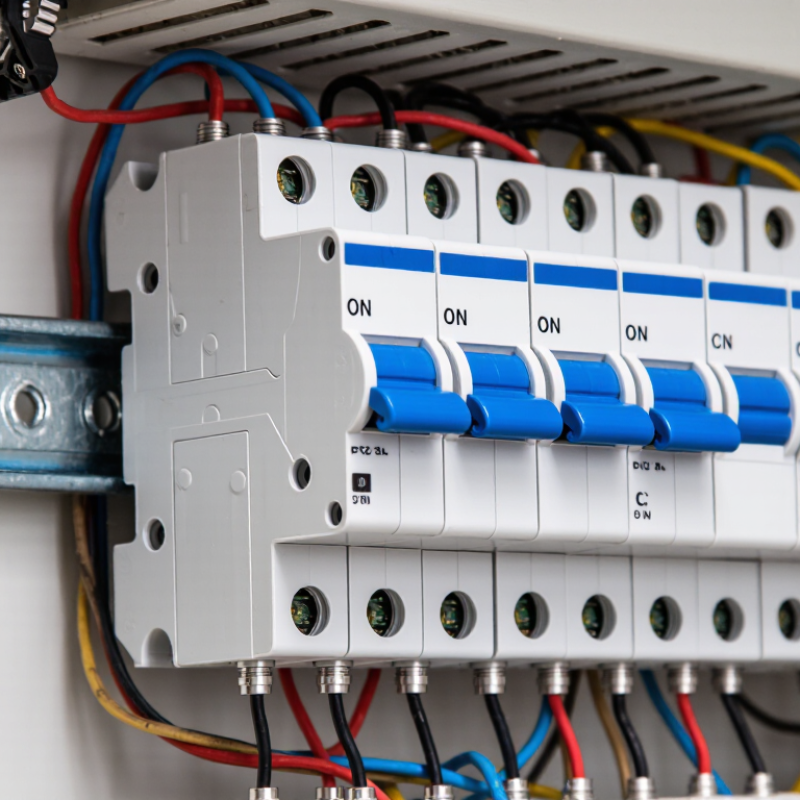
A mini circuit breaker, or MCB, is a compact protective switch for low-voltage circuits. It monitors current through a thermal and magnetic trip mechanism. A sustained overload heats a bimetal strip. The strip bends and opens the circuit. A sudden short circuit activates the magnetic trip almost instantly. This action limits overheating in cables, sockets, and connected equipment.
IEC 60898-1 defines performance requirements for household and similar circuit breakers. However, an MCB does not detect every electrical danger. It may not respond to a small leakage current or a poor connection. That assumption is incomplete.
NFPA’s report on electrical distribution and lighting equipment recorded about 45,000 U.S. home fires annually during 2012–2016. These fires caused approximately 440 civilian deaths, 1,250 injuries, and 1.3 billion dollars in property damage. Correct breaker selection matters because cable size, ambient temperature, and expected load affect protection.
Tips: Match the MCB rating to the conductor and circuit design, not simply to appliance power. Check the trip curve, breaking capacity, and pole arrangement. Test the circuit after installation using approved procedures. A breaker that trips repeatedly needs investigation, not repeated resetting. In real projects, labeling is often overlooked, yet clear labels can shorten fault isolation and reduce risky guesswork. Professional inspection remains valuable, especially in older panels where heat marks, loose terminals, or corrosion may hide the real problem.
Why Use a Mini Circuit Breaker?
Mini circuit breakers protect electrical circuits from overloads and short circuits. Their thermal mechanism responds to sustained excessive current. A magnetic mechanism reacts quickly to sudden fault currents. This two-part protection helps reduce overheated wires, damaged equipment, and fire risks.
In practical panel inspections, I check whether the breaker rating matches the cable size and expected load. A correctly selected breaker can also isolate one faulty circuit while other circuits remain energized. This makes maintenance more controlled and troubleshooting less disruptive. Many models include a clear handle position, which helps users identify a tripped circuit. However, a breaker is not a substitute for proper wiring. Poor connections can still create heat before the breaker operates. That detail is easy to overlook.
Tips: Keep the circuit label accurate. Test the installation with suitable instruments. Do not repeatedly reset a tripped breaker without finding the cause. Follow local electrical codes and the installation instructions. Leave final testing to a qualified electrician when the panel condition is uncertain. Small devices still need careful selection.
Mini circuit breakers improve safety by interrupting abnormal current before wiring becomes dangerously hot.
Their thermal mechanism responds to sustained overloads, while the magnetic mechanism reacts quickly to short circuits. This two-stage protection matters in a panel where a loose terminal, damaged cable, or overloaded socket can develop quietly.
IEC 60898-1 covers household breakers rated up to 125 A, 440 V, and 25 kA short-circuit capacity. These figures show why correct selection matters; “mini” does not mean lightly engineered.
NFPA’s Home Structure Fires report, 2024 edition, reviewed fire data from 2018–2022 and lists electrical distribution and lighting equipment among major equipment categories linked to home fires.
A correctly rated breaker can reduce the energy released during these faults. It also isolates one circuit, leaving essential lighting or other circuits available. Practical inspections often reveal the weak point: people replace a frequently tripping breaker without finding the cause. That is unsafe.
A breaker cannot compensate for undersized conductors, poor connections, or incorrect installation.
It may even trip too slowly when the wrong curve or interrupting rating is chosen. Testing the mechanism, checking terminal torque, and matching the breaker to cable capacity remain essential. The small enclosure saves panel space, but the protection still depends on careful engineering.
Why Use a Mini Circuit Breaker?
A mini circuit breaker protects wiring from overloads and short circuits while fitting neatly inside a distribution board. Choosing the right model requires more than matching its physical size. Start with the system’s rated voltage, current, and number of poles. Then check the expected load, especially if it includes motors, pumps, heaters, or lighting groups. The breaker’s trip curve should suit the equipment. A motor may need different starting tolerance than a lighting circuit. Select a breaking capacity that exceeds the possible fault current at the installation point. Never guess this value.
The installation environment matters too. Check temperature, humidity, enclosure space, and the number of breakers mounted together. Heat can reduce performance. Verify that the breaker complies with applicable electrical standards and local code requirements. In practice, choosing only by amperage is an easy mistake. I have found that a careful load review often prevents nuisance trips later. Still, calculations can be imperfect when equipment usage changes, so leave reasonable capacity without oversizing the protection.
Tips: Read the circuit diagram before purchasing. Measure the available rail space. Confirm terminal compatibility and conductor size. Test the breaker after installation, following approved procedures. If the fault current or load behavior is uncertain, ask a qualified electrician to verify the selection. Small details matter.
A mini circuit breaker (MCB) protects wiring and equipment from overloads and short circuits while allowing the circuit to be reset after a trip. The chart compares the typical instantaneous magnetic-trip ranges defined for B, C, and D characteristics under IEC 60898-1.
Choose the rated current according to the circuit design current and the permitted cable ampacity. Select a B curve for common residential loads, a C curve for moderate inrush currents such as motors or fluorescent lighting, and a D curve only where high starting currents are expected and the installation can provide sufficient fault current.
Mini circuit breakers protect branch circuits from overloads and short circuits.
Their compact size suits residential panels, control cabinets, and limited retrofit spaces. Installation still demands careful planning. A qualified electrician should isolate the supply and verify zero voltage with a suitable tester. Never trust a switch position alone. The breaker must match the circuit’s conductor size, expected load, and local electrical requirements.
Mount the device firmly on the correct rail, with adequate clearance for wiring and heat dissipation. Loose terminals can create resistance, heat, and eventual failure. Tighten connections to the manufacturer’s specified torque, then label each circuit clearly. Labels save time during faults, especially when several breakers look identical.
A rushed installation may appear tidy but remain unsafe.
Maintenance should include visual checks for discoloration, cracking, moisture, or unusual odor.
Test the protective function where a test feature is provided, following the equipment instructions. Do not repeatedly reset a tripped breaker without finding the cause. That habit can hide damaged insulation or an overloaded appliance.
In practice, inspection records are often incomplete, and that is worth correcting.
Note the date, circuit identification, observed condition, and corrective action. Dust removal should be gentle; aggressive cleaning can damage internal parts.
Replacement is usually wiser when the mechanism feels loose, overheats, or fails its test.
WhatsAppOffer Electronics Manufacturing All-in-One
PCBONLINE® is a registered trademark or service mark of pcb online limited or its affiliates.
Copyright © 2001-2024 Pcb Online Limited. All rights reserved